
Repentance vs. Repression:
A Tale of Two Nations

A friend once told me about their experience visiting Germany. From the moment they arrived, the locals immediately recognized them as tourists and insisted they visit the Holocaust memorials. It was as if the people were eager to make it known that they fully acknowledged their country’s past mistakes. They were repentant, committed to ensuring future generations never repeat those horrors, and desperate to repair their nation’s reputation in light of them.
These are people who understand the value of reconciliation. They embrace confession, practice repentance, and move forward with a clear acknowledgment of past wrongs and a commitment to a different future.
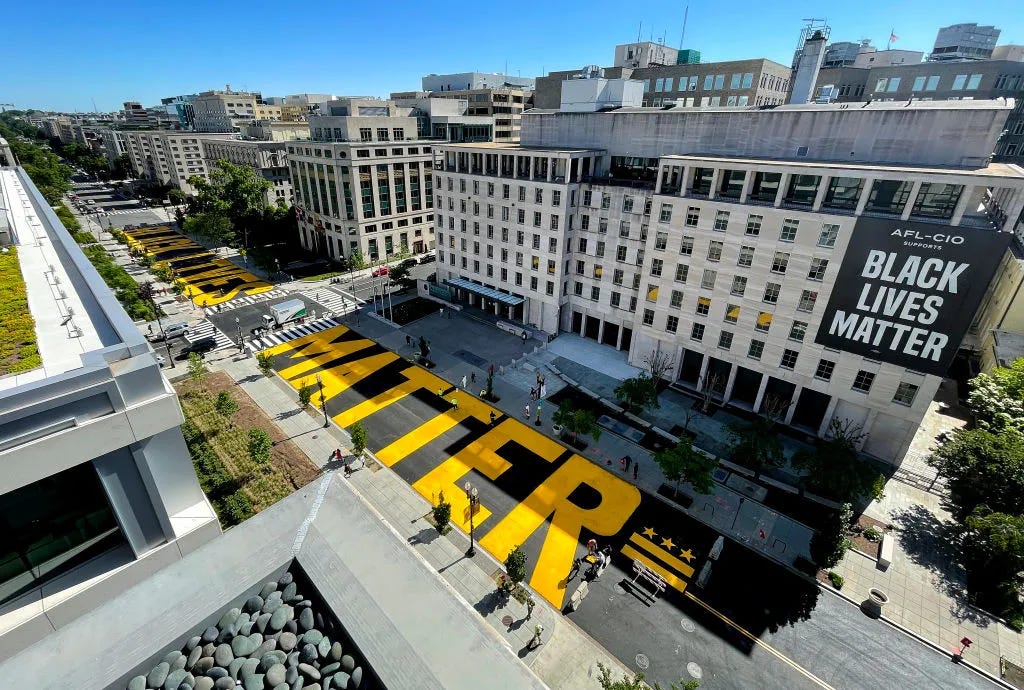
As I watch construction crews remove the Black Lives Matter display in Washington, D.C., I can’t help but think of my friend’s story about Germany. The contrast is striking: one nation is willing to face its sins, while the other seems intent on erasing them.
How tragic that the country so eager to ignore its sins is the same one historically praised as a Christian nation—a faith built on the confession of sin and the act of repentance.
American leaders who champion this kind of erasure often claim they are “making America great again” or that these acts of destruction signal that “America is back.” But if what they seek is a return to the America of old, it only confirms how unchristian this nation has been throughout history. A truly Christian America would recognize its sin—particularly its failure to treat Black people, bearers of the image of God, with dignity and value.
So yes, perhaps America is back. But in the eyes of God, the America we are returning to was never great.
Like a bleached blonde needing a touch-up, America’s roots are showing. Or perhaps they have been there all along, and we somehow missed it.
Thank you for this perspective. I agree wholeheartedly.
Unfortunately, some of my friends and family members, who I consider committed Christians, have ignored the sentiment behind Black Lives Matter and focused instead on the ideology of the founders of the organization. However, I believe that as a Christian, I should champion truth regardless of where it comes from. So thanks again for articulating so well a more accurate Christian perspective.